Microcement floors: one continuous floor through the whole home
Living room, hallway, kitchen and utility room in one surface, without thresholds, joints or trims. Microcement is laid straight over tiles, concrete or screed at 2–3 mm, so doors and joinery stay as they are. The floors you see here were laid by us.
Or call 844 8515
Why a microcement floor?
A microcement floor is one whole. No grout to clean, no trims and no threshold between rooms. The space feels larger and calmer, and the texture is alive: the trowel marks and colour variation make every floor unique.
It is laid straight over what is there. Old tiles are sanded and primed, concrete and screed primed, and the mesh keeps movement in the substrate from reaching the surface. No demolition, no dust, and the floor rises by three millimetres, not three centimetres.
Underfloor heating works well with microcement. The material is thin and conducts heat well, better than parquet or vinyl.
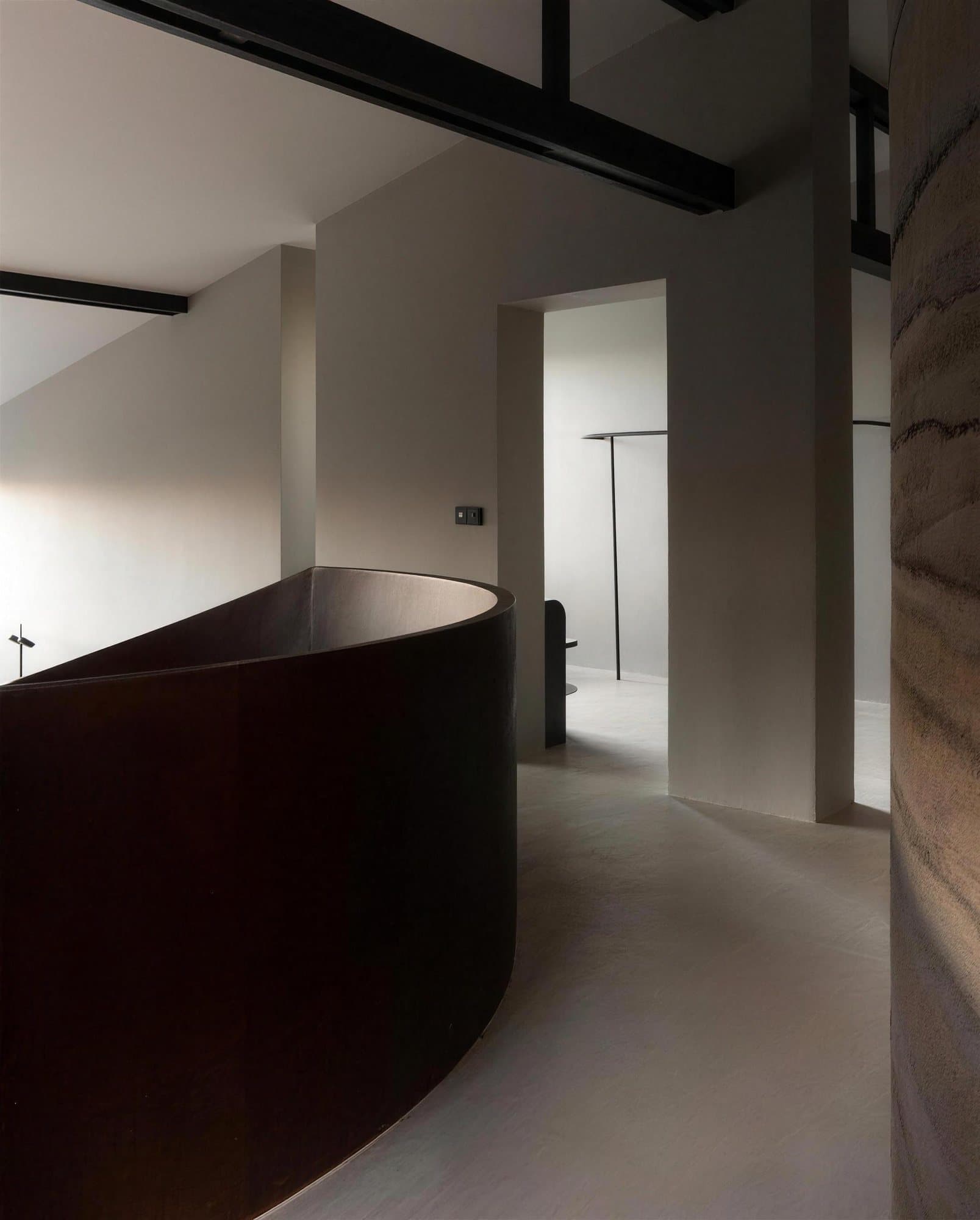
House, Reykjavík
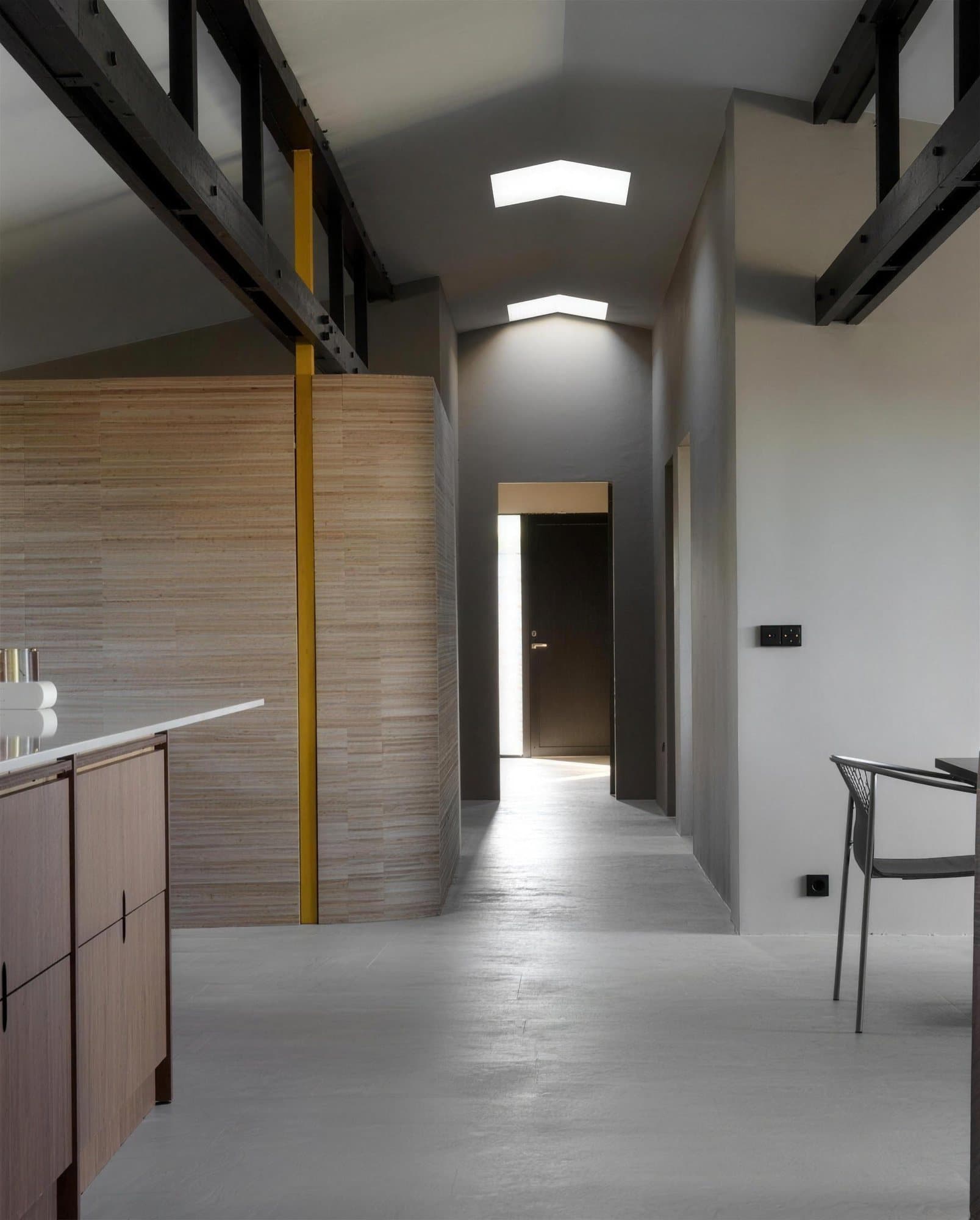
Hallway with skylights
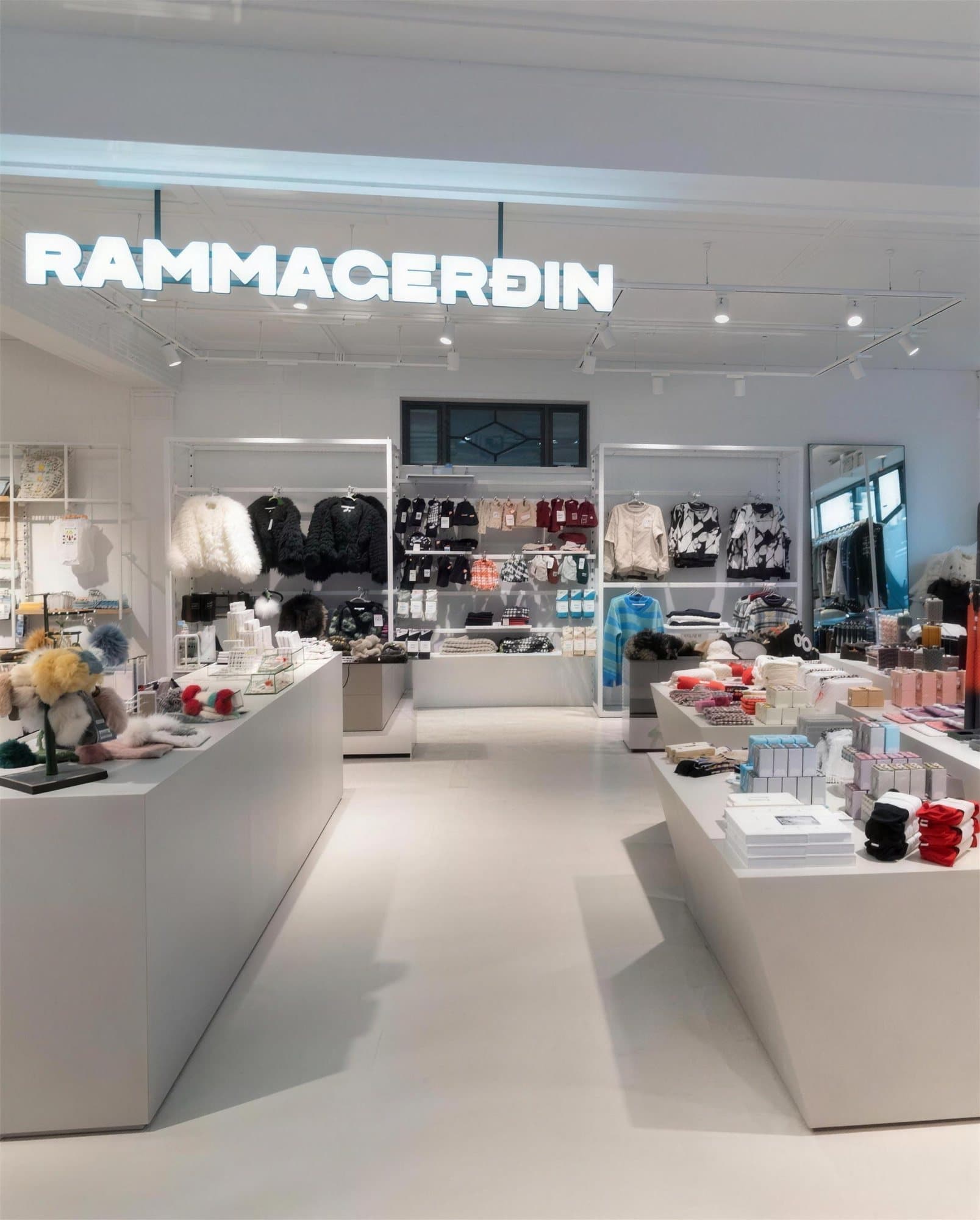
Shop, Laugavegur
Texture and grip
On floors we use medium grain in the finish coats. It gives more life to the texture and better grip than the fine grain that goes on walls. The lacquer is matt or satin, two-component polyurethane, three coats on heavily used floors.
The floor is no more slippery than tiles. Where more grip is needed, in an entrance or on stairs, we add anti-slip to the lacquer.
The process and the time
A floor of 40–80 square metres takes about a week, larger floors longer. Large floors are laid with the powder system mixed with water, which has very high compressive strength. The room cannot be walked through meanwhile, so furniture needs to be out before we start.
Day 1
Grinding, vacuuming and primer. Fibreglass mesh over the whole floor.
Day 2–3
Two base coats, sanded between.
Day 4
Two finish coats in the chosen colour.
Day 5–6
Pore filler and three coats of lacquer.
Day 7
Walk in socks. Light furniture with felt pads after two days, heavy furniture and rugs after a month.
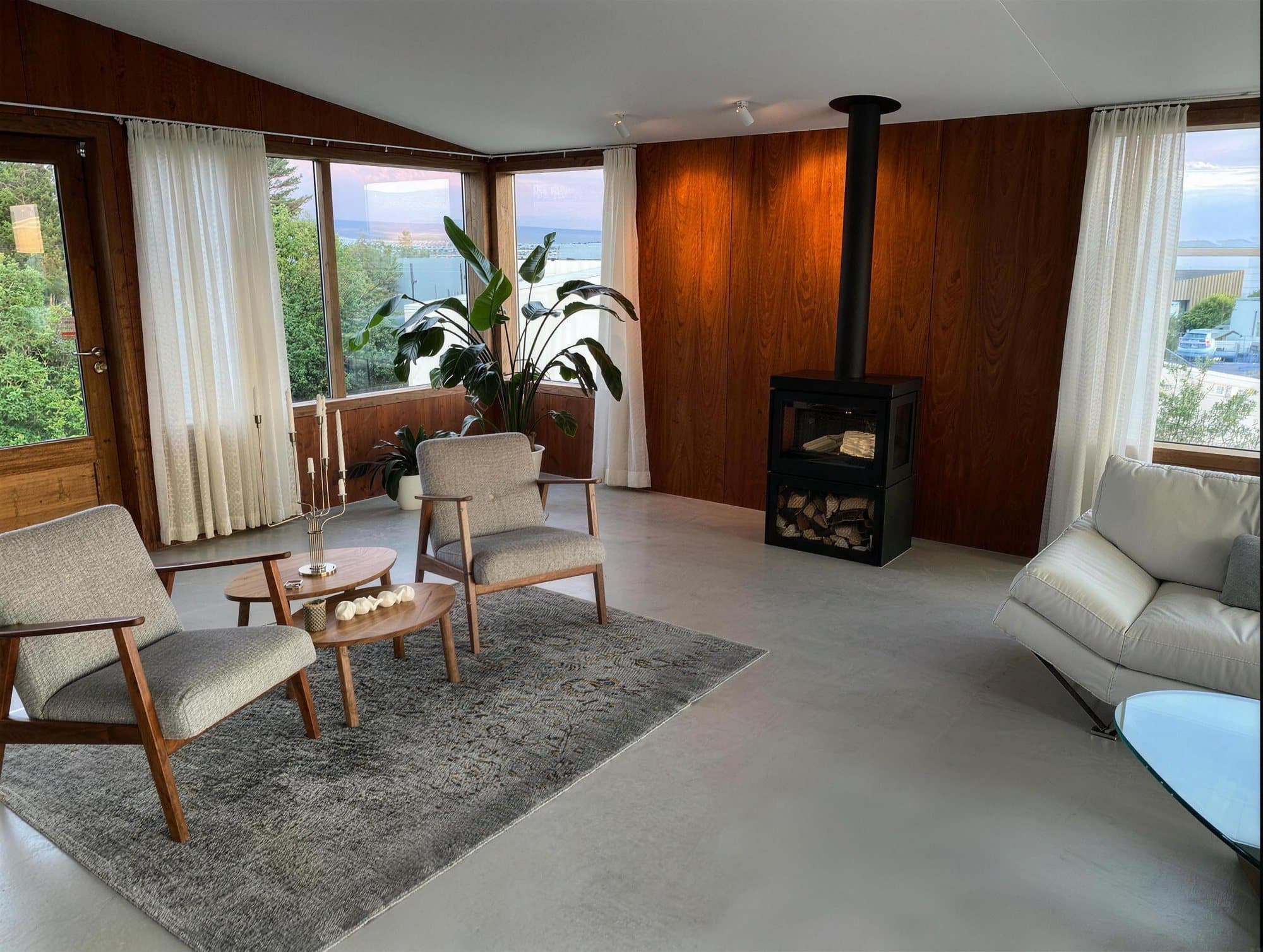
Living room, floor and stove
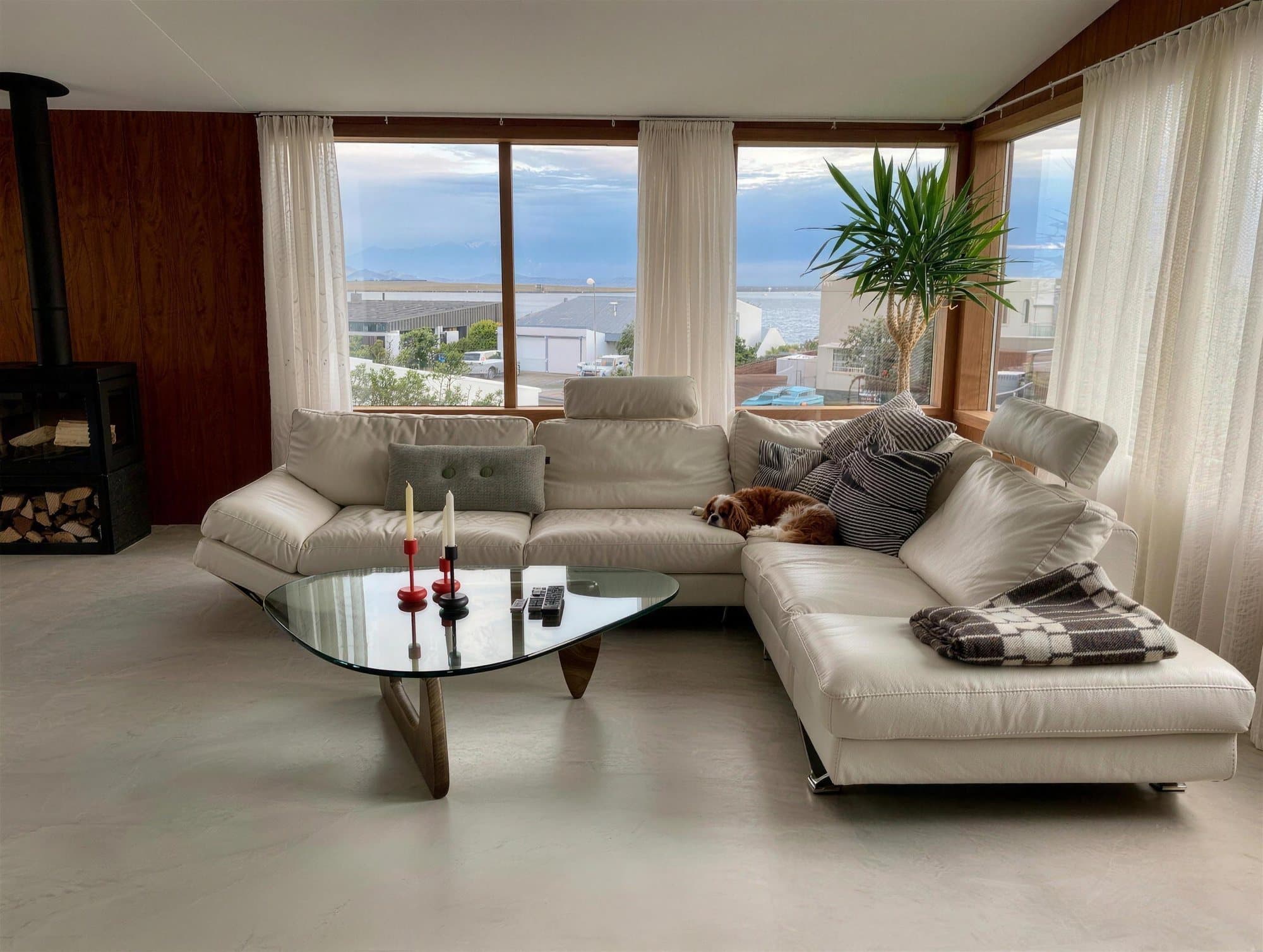
Laid straight over the old floor
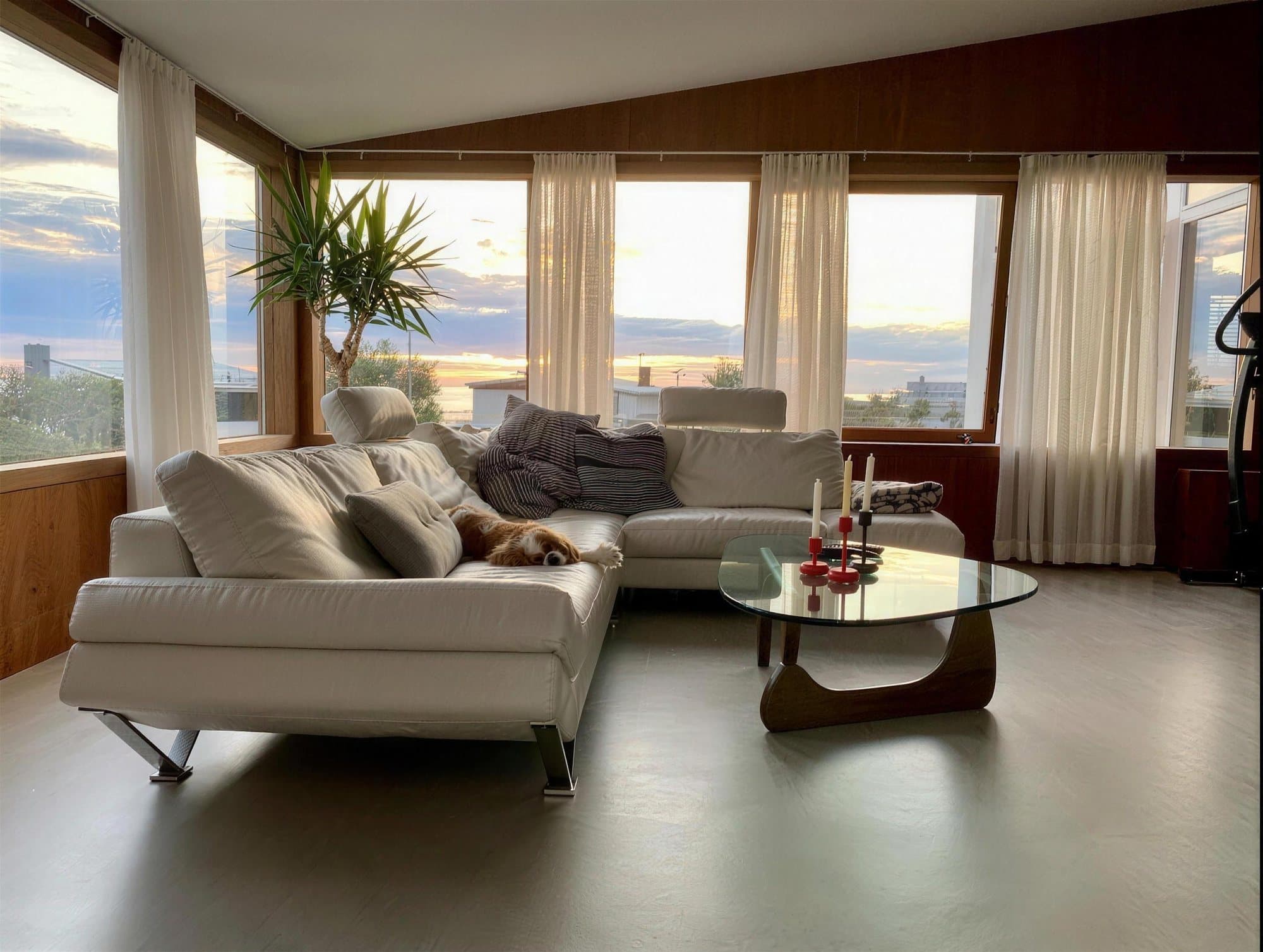
Evening light on the floor
What does a microcement floor cost?
The size of the floor sets the price. Large open floors are the cheapest way into microcement, about 20–30% less per square metre than walls, because buckets, edges and drying time are spread over more area. Smaller floors and several rooms cost a little more, because the edges and fittings to work around set the time. Send us measurements and photos and you get a price the same day.
| Large open areas | Lowest price per m², about 20–30% below walls |
|---|---|
| Smaller floors and several rooms | A little more per m², depends on edges and rooms |
| Stairs and steps | Quoted, depends on number and shape |
You get an exact price from photos and measurements, the same day and free of charge, including materials, labour and VAT. The price includes grinding, primer and mesh, four coats of microcement, pore filler and lacquer.
Microcement, self-levelling or epoxy?
Microcement
Hand-trowelled, living texture, also suits walls and wet rooms. For homes, shops and restaurants where the look matters.
Self-levelling floor
Poured and self-levelling, perfectly smooth and uniform. For those who do not want trowel marks, and as a base when the floor is uneven.
Epoxy and self-levelling floorsEpoxy floor
Two-component resin, hard and chemical-resistant. For garages, industry and workshops where the load is highest.
Epoxy and self-levelling floors
Get a floor quote the same day
Send photos of the space, the square metres and what is on the floor now. That way we can usually price it straight away.
Or call 844 8515
Floorquestions
Can microcement go over parquet?
Rarely. Parquet moves with humidity and heat and that comes through to the surface. Over tiles, concrete, screed and screwed-down boards it works well.
Does a microcement floor cope with dogs and chairs?
Yes, with the same care as parquet: felt pads under chairs and a mat where the wear is heaviest. Claws scratch the lacquer over time as on any floor, and the lacquer can be renewed.
How do I clean the floor?
Vacuum or broom and a damp cloth with pH-neutral soap. No chlorine, acids or scouring pads.
What if the floor cracks?
Microcement follows its substrate. The mesh takes up small movements, but if a hairline crack appears because the building moves, it can be repaired locally.
Get in touch
Tell us about the project and send photos of the space if you can. That way we can usually price it straight away.
Service area: the Reykjavík capital region and all of Iceland. Travel is charged outside the capital region.
Or directly