Microcement bathrooms: a new bathroom in a week, without demolition
Bathrooms are our most common job. The old tiles stay; we lay microcement straight over them, walls, floor and shower as one surface. No grout to scrub, no demolition, and the bathroom is back in use after about a week.
Or call 844 8515
Why microcement in the bathroom?
Grout is the weakest point in every bathroom. That is where dirt collects, where mould starts and where water eventually gets through. Microcement has no grout. Walls, floor and shower tray become one continuous surface that is cleaned with a damp cloth.
Because the material is only 2–3 mm thick, we lay it straight over the existing tiles. That saves demolition, dust, a skip and days of work, and the bathroom does not rise by a centimetre.
The look is what most people are after: a calm, matt stone surface in one colour that makes a small bathroom feel larger.
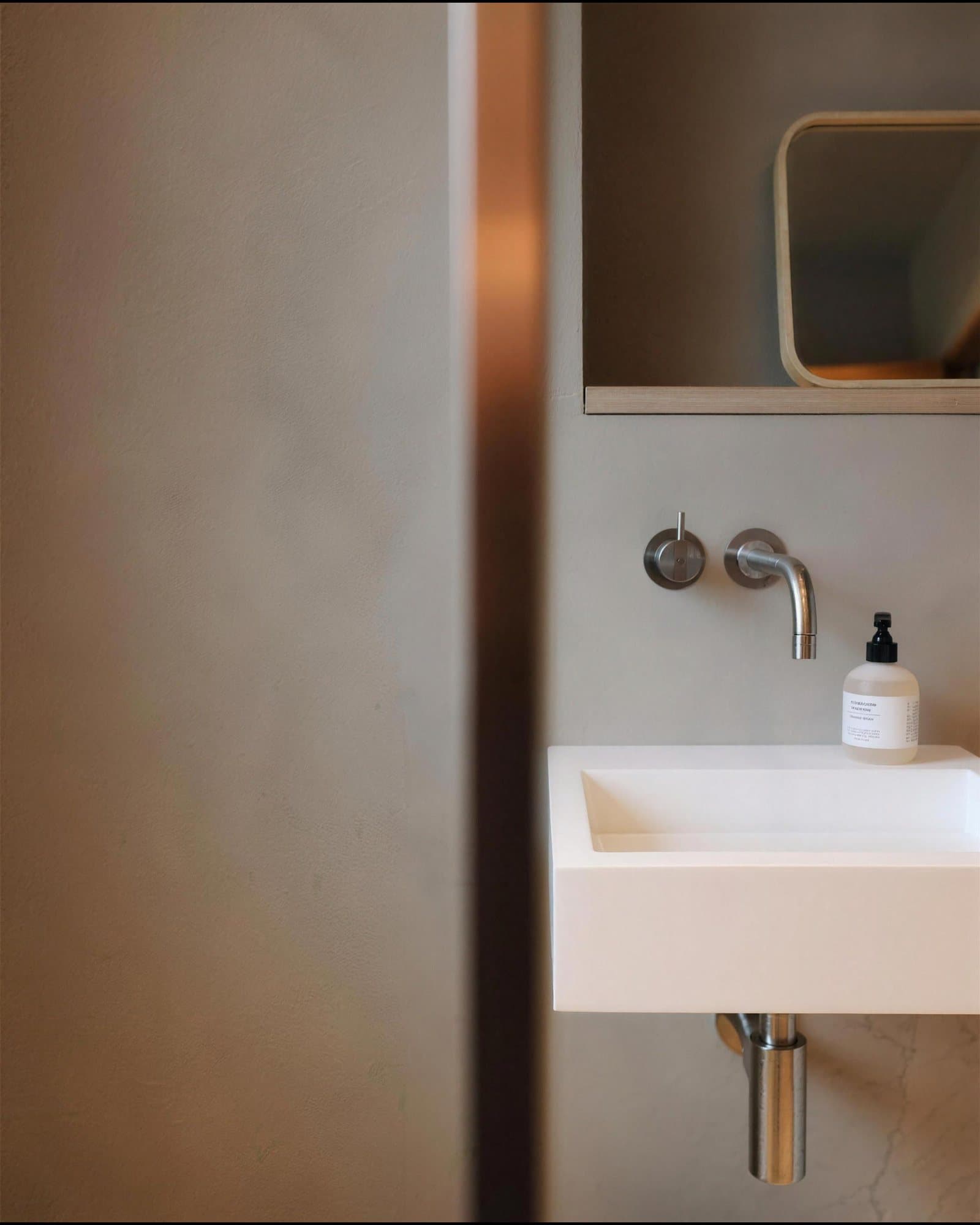
Wall and basin
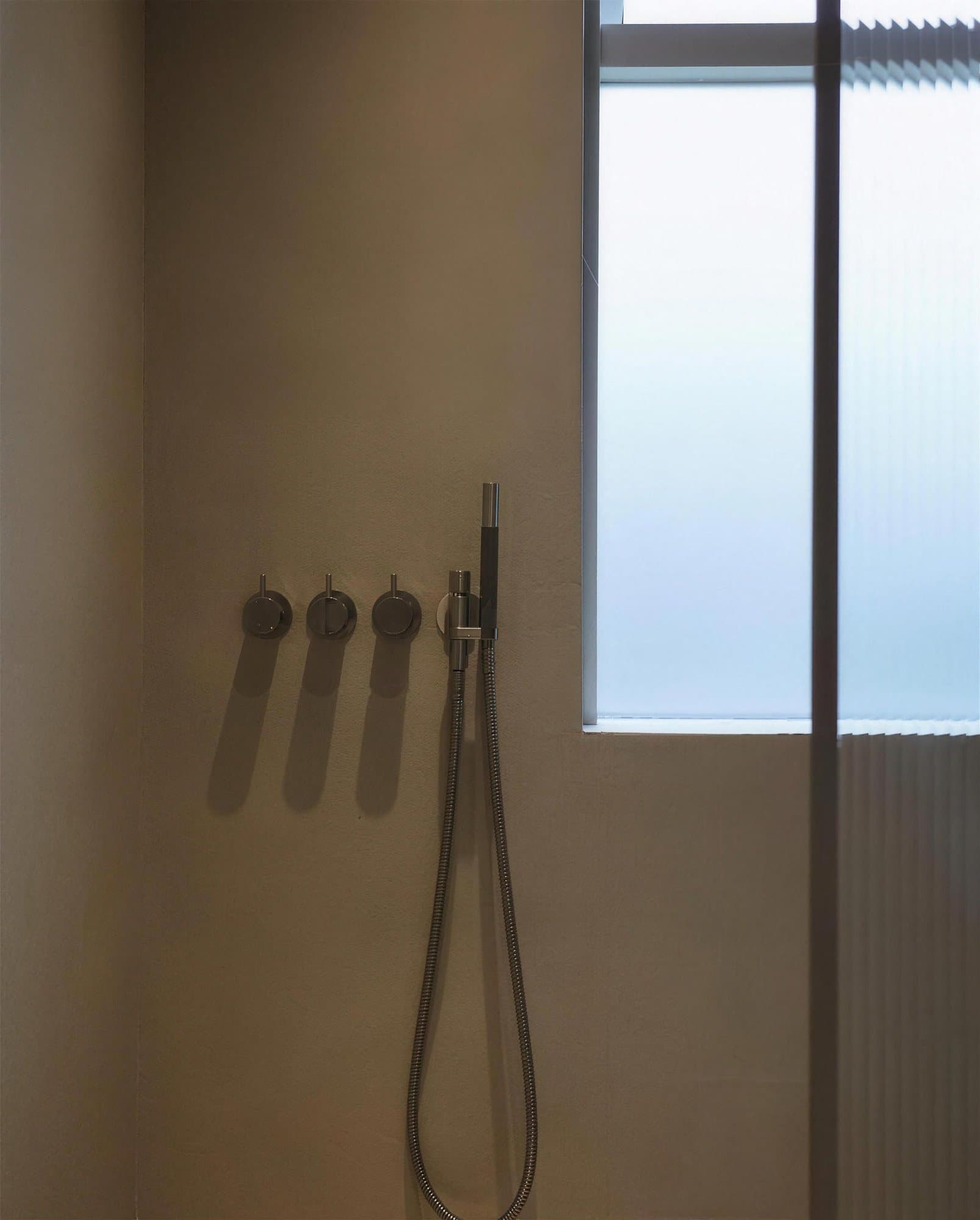
The shower
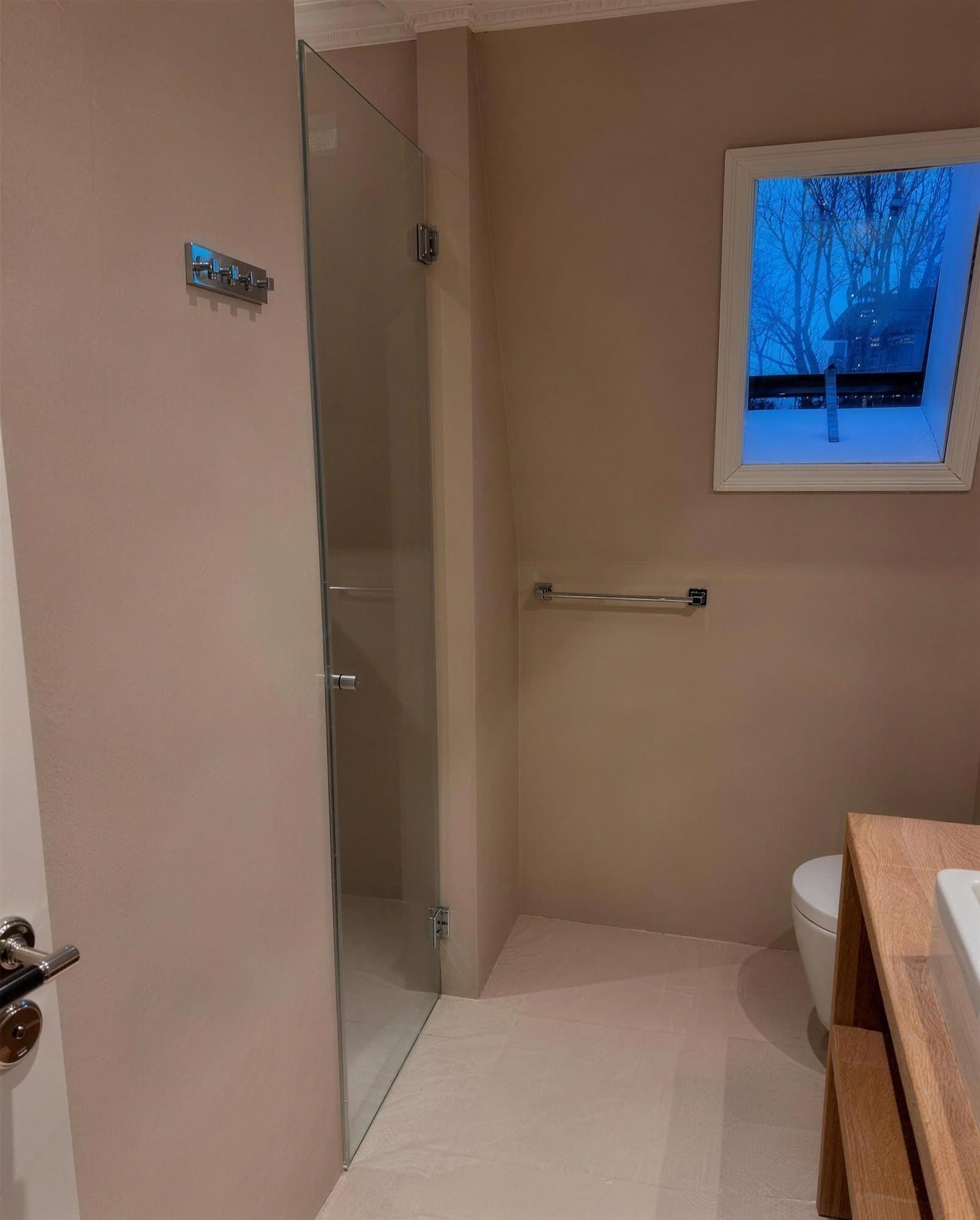
Small bathroom, shower corner
Waterproof in every layer
In wet rooms we use a ready-mixed microcement that is waterproof in every single layer, not just in the lacquer. That matters: if the lacquer gets scratched over time, water still cannot get into the material and it does not darken.
Shower walls and floors also get a waterproofing system underneath, and the drain is detailed separately so the water finds the right way. The lacquer goes on in three coats in the shower instead of two elsewhere.
The process, day by day
Day 1
Tiles sanded and grout lines levelled, fittings and drain removed or taped off. Waterproofing in the shower, then primer and fibreglass mesh over everything.
Day 2–3
Two base coats of microcement, sanded between.
Day 4
Two finish coats in the colour you chose. The texture appears.
Day 5–6
Pore filler and three coats of lacquer in the shower, two elsewhere. A day between coats.
Day 7
Fittings refitted. Basin and toilet in use straight away, the shower a week after the last coat of lacquer.
The bathroom is closed while the work is on. If it is the only bathroom in the home, we plan the job so the toilet is out of use for as short a time as possible.
What does a microcement bathroom cost?
Bathrooms usually come to 38,000–48,000 ISK per square metre including materials, labour and VAT. Full-height walls cost less per square metre than partial walls, because the edges and taping set the time, and the shower costs more than a wall because waterproofing and an extra coat of lacquer go in.
| Small bathroom, about 12 m² of walls and 3 m² of floor | about 570,000–720,000 ISK |
|---|---|
| Average bathroom, about 20 m² of walls and 5 m² of floor | about 0.95–1.2 million ISK |
| Large bathroom or two bathrooms together | Lower price per m², quoted |
Guide prices including materials, labour and VAT. You get an exact price from photos and measurements, the same day and free of charge.
What needs to be ready?
Tiles firmly attached. Loose tiles are removed and the hole filled before we start.
Plumbing and drain in order. Now is the time to move fittings or change the drain.
Colour chosen. We bring lacquered samples to you, and samples are also on show at Gólfefnabúðin.
Heat and ventilation. The room needs to be 15–25 °C and dry while we lay.
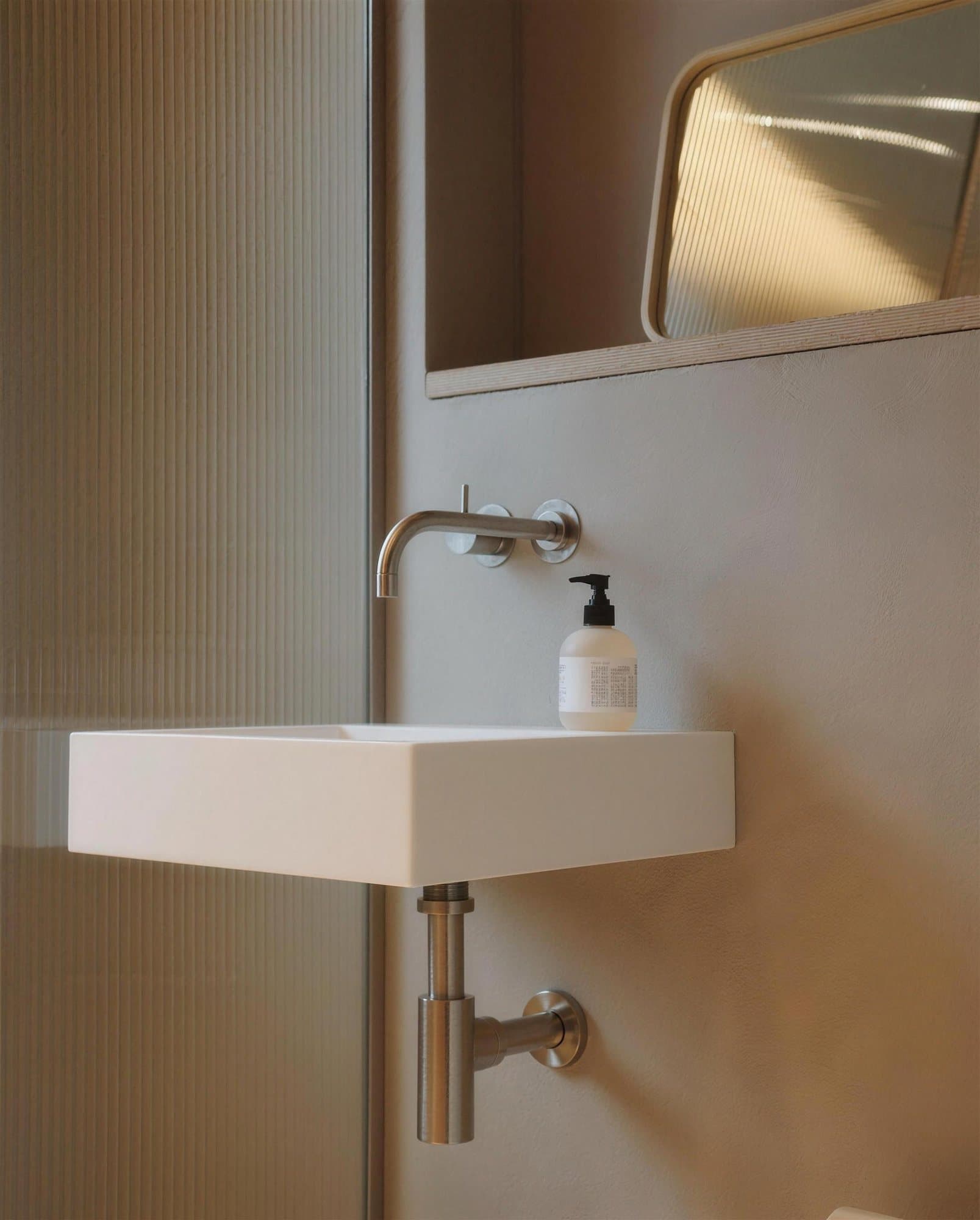
Basin and mirror
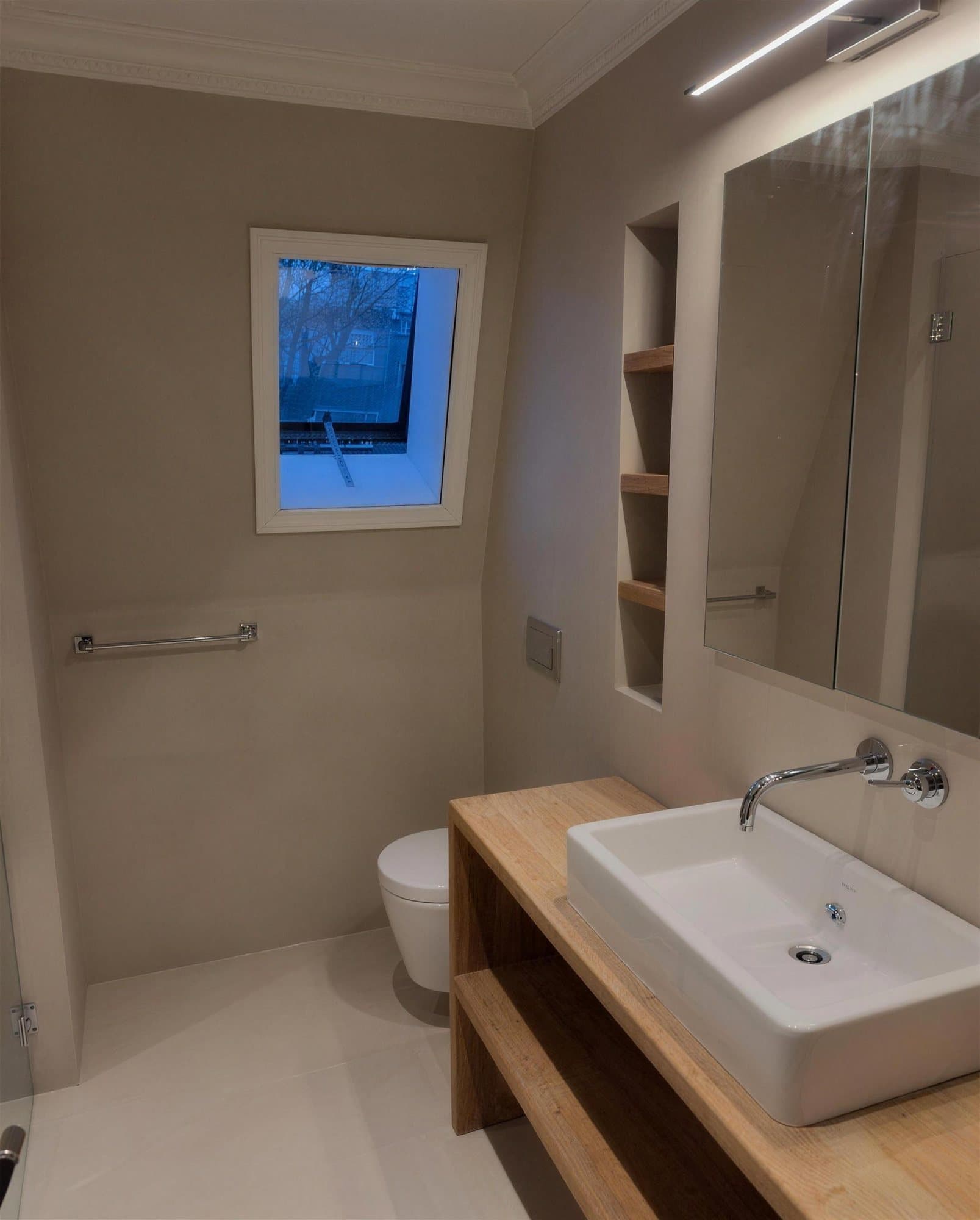
Small bathroom, walls and floor
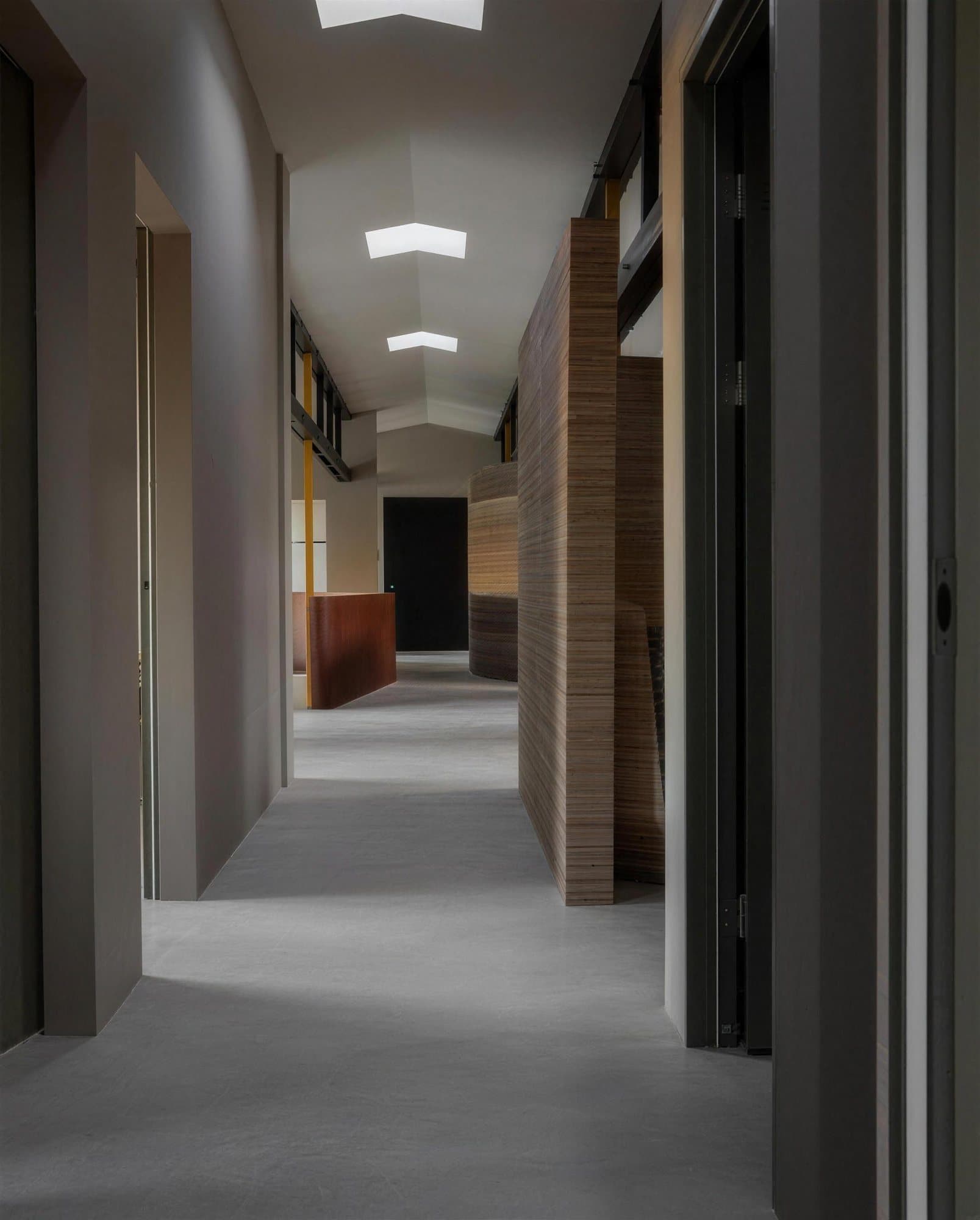
The floor continues into the hall
Get a bathroom quote the same day
Send photos of the bathroom, the square metres of walls and floor, and whether the shower is included. That way we can usually price it straight away.
Or call 844 8515
Bathroomquestions
Is microcement in a shower really waterproof?
Yes. The material we use in wet rooms is waterproof in every layer, waterproofing goes under shower walls and floors, and the lacquer goes on in three coats. The shower is used a week after the last coat.
Can mould grow on microcement?
Mould needs grout, cracks and damp to take hold. Microcement has no grout and a sealed surface, so it has nowhere to settle. Ventilation still matters, as always.
Can microcement go on a shower tray with a drain?
Yes. The drain is detailed separately with a sealing collar and the fall towards it stays as it was. A linear drain gives the best result.
What about bathtubs and vanities?
Baths, vanities and basins can stay in place; we tape off and work around them. If you plan to change the vanity, it is best done at the same time.
How long is the bathroom out of use?
About a week. Basin and toilet are back in use straight after sealing, the shower after seven days.
Get in touch
Tell us about the project and send photos of the space if you can. That way we can usually price it straight away.
Service area: the Reykjavík capital region and all of Iceland. Travel is charged outside the capital region.
Or directly